
Ready to build the business you were born to lead? Let’s get started!
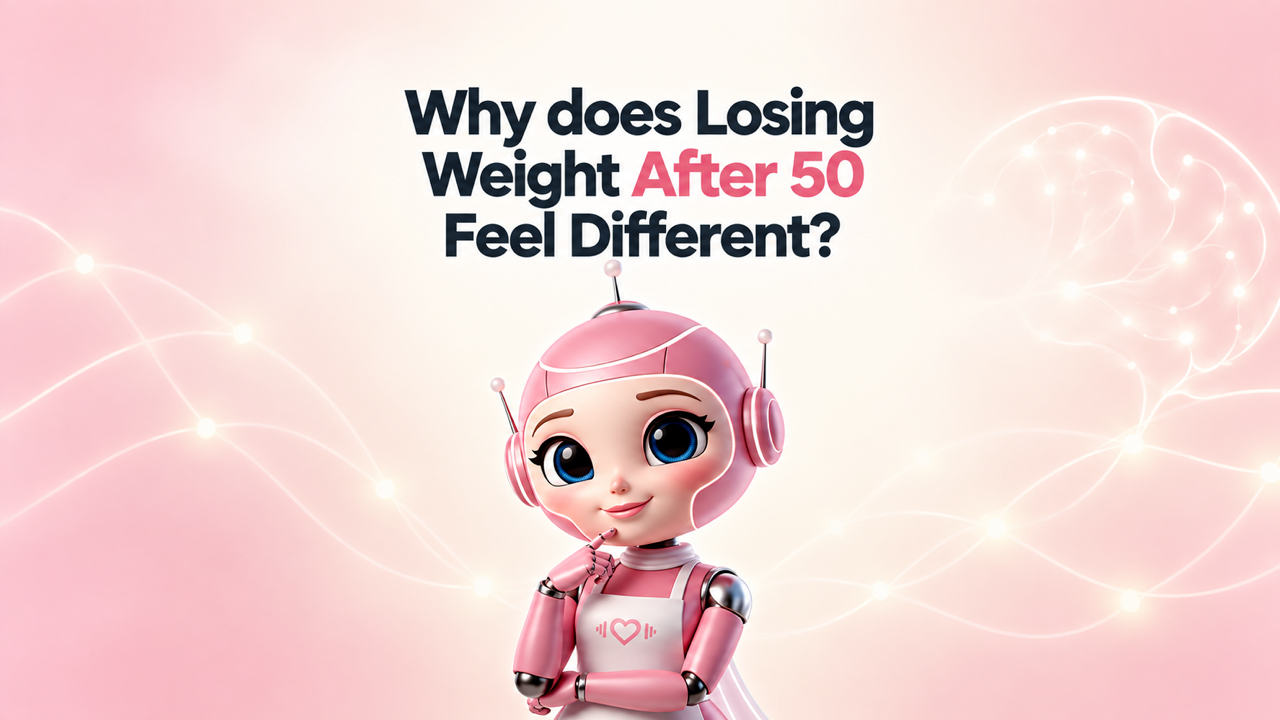
Why Losing Weight After 50 Can Feel Different
Sep 22, 2026
The brain, the body, and what to do when willpower isn’t enough
You can know what you want to eat, have a plan for the week, and still find yourself standing in the kitchen at 6 p.m. wondering what happened to that plan.
If weight loss feels different than it did years ago, you’re not imagining the challenge. But it isn’t because you’ve suddenly lost your willpower. Your brain and body regulate appetite, respond to sleep, learn habits, and adapt to changes in weight. For many women, the menopause transition adds another layer.
Understanding those changes won’t make every choice easy. It can, however, help you stop treating a hard day as a personal failure.
Your brain is listening to your body
Hunger isn’t just a thought you can switch off. The brain receives signals about hunger, fullness, and available energy from throughout the body. It also responds to the sight, smell, and pleasure of food. Meanwhile, the parts of the brain involved in planning and self-regulation help you act on longer-term goals.
That means “I know what to do” and “I can do it right now” are two different things—especially when you’re tired, stressed, or your day has gone off course. Researchers continue to study how food reward and cognitive control interact; there is no single “willpower center” that explains weight loss. Read the review on food reward and eating behavior.
Menopause can change the picture—even when the scale doesn’t tell the whole story
For women going through menopause, changes in body composition can be particularly frustrating. In a long-running study of midlife women, fat gain accelerated and lean mass declined around the menopause transition. Yet weight on the scale did not suddenly accelerate in the same way. Read the SWAN study.
This doesn’t mean every woman will have the same experience, or that menopause is the only factor involved. It does mean the scale may miss changes that matter. Muscle, strength, activity, sleep, medications, and overall health all deserve attention alongside weight. The National Institute on Aging notes that weight alone tells only part of the story as we get older.
Poor sleep can make an already difficult day harder
Sleep is part of the weight-management picture, too. Sleep changes are common during midlife and menopause, and researchers are studying how they affect appetite and metabolic health. Studies in adults also suggest that restricting sleep can increase food intake—but those experiments should not be treated as a precise prediction for every woman over 50. Read the midlife sleep review.
The practical point is simple: if you slept badly and feel hungrier or less able to follow your plan, that experience deserves curiosity, not criticism.
Your body can push back after weight loss
Losing weight and maintaining that loss are not exactly the same task. In one study, people who lost a substantial amount of weight experienced changes in appetite-related hormones and reported greater hunger; some of those changes were still present a year later. The study was not specific to people over 50, but it helps explain why ongoing support can matter at any age. Read the weight-loss adaptation study.
None of this means your body is “broken” or that progress is impossible. It means a strategy built only on enthusiasm at the beginning may not be enough for the ordinary days that follow.
The next step matters more than a perfect day
So what do you do when the day goes sideways?
Start smaller than “fix everything.” Ask what happened. Was the plan unrealistic for today? Are you hungry, tired, short on time, or missing an easy dinner option? Then choose one useful next step. An imperfect meal doesn’t require an imperfect week.
That is the everyday gap we’re building ROZY to help with. ROZY is an AI accountability, mindset, and weight-loss coach designed to help you talk through a difficult moment, adjust a plan, and keep moving. She isn’t a clinician, and we’re not claiming that ROZY has been clinically proven to produce weight loss. The purpose is to make practical support easier to reach when you need it.
Weight loss after 50 is not a character test. It’s a process shaped by biology and daily life. You deserve an approach that takes both seriously.
If you have a medical condition, take medication that affects your weight or appetite, or are concerned about losing muscle, speak with a qualified health professional before starting a weight-loss plan.
Build Smarter, Not Louder. Join the Born to Build newsletter.
Get weekly builder blueprints, mindset shifts, and spotlights—straight to your inbox

From idea to launch, we help founders turn scattered dreams into strategic, fundable ventures.
Why Choose Us ?
At Hadassah Jacobs International, we don’t just coach — we build.
Multi-Sector Startup Success
Founder-Centric, Mission-First Approach
Track Record of Turning Ideas Into Action
Resources
Connect
hadas@hadassahjacobs.com